
Now Reading: Wayne Gretzky: Records, Championships and the Legacy of “The Great One”
-
01
Wayne Gretzky: Records, Championships and the Legacy of “The Great One”

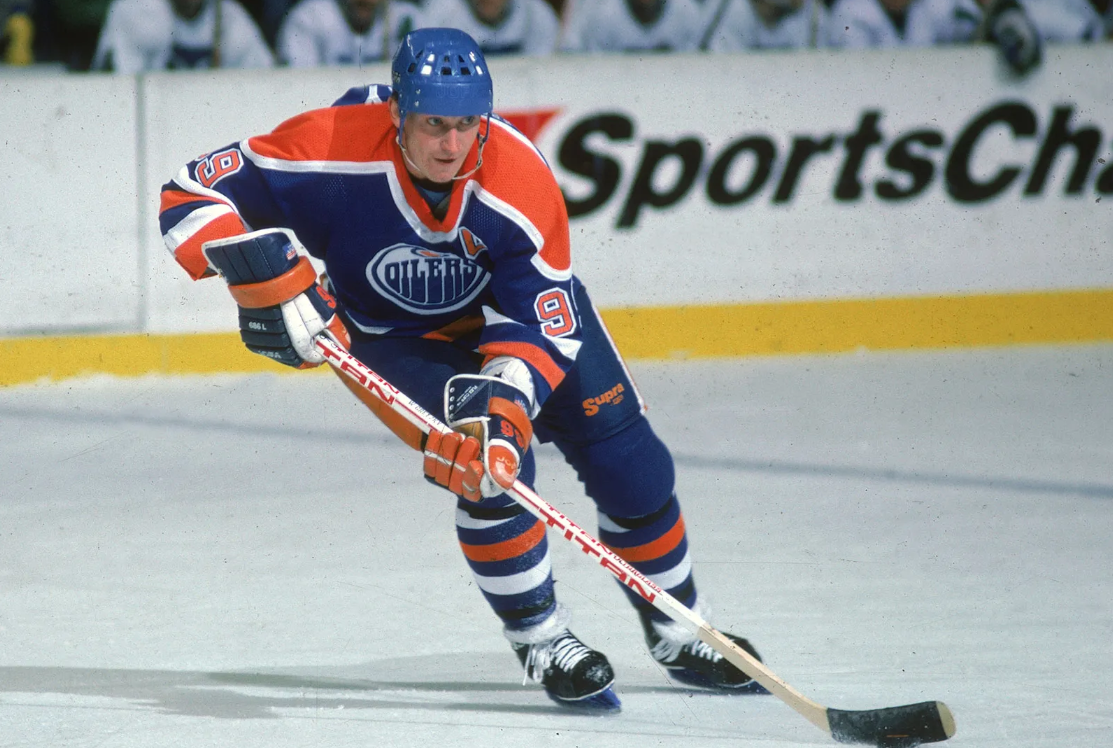
Wayne Gretzky is widely regarded as one of the greatest ice hockey players in history and one of Canada’s most internationally recognizable sporting figures. Nicknamed “The Great One,” Gretzky transformed expectations of offensive performance in the National Hockey League and accumulated records that have shaped discussions about hockey excellence for decades.
Born in Brantford, Ontario, in 1961, Gretzky demonstrated exceptional ability on the ice from an unusually young age. His father, Walter Gretzky, played a major role in his early development, creating a backyard rink where Wayne spent countless hours practicing. Rather than relying primarily on physical size or strength, Gretzky developed extraordinary awareness of space, anticipation, passing, and positioning.
These qualities became fundamental to his professional style. Gretzky seemed able to predict how plays would develop several seconds before other players. He understood where teammates and opponents were likely to move and used that awareness to create scoring opportunities.
After playing in the World Hockey Association, Gretzky entered the NHL with the Edmonton Oilers when the franchise joined the league in 1979. Edmonton soon developed into one of the most dominant teams of the 1980s.
Alongside players including Mark Messier, Jari Kurri, Glenn Anderson, Paul Coffey, and Grant Fuhr, Gretzky helped create a fast, highly offensive style of hockey. The Oilers won four Stanley Cups during Gretzky’s years with the team, establishing a dynasty and producing some of the most memorable offensive seasons in league history.
Gretzky’s individual statistics were extraordinary. He became the NHL’s all-time leader in goals, assists, and points and set numerous single-season and career records. His 92-goal season in 1981–82 became one of hockey’s most famous benchmarks.
Yet his greatest strength may have been playmaking rather than goal scoring. Gretzky recorded so many assists during his career that this category alone demonstrates the unusual scale of his offensive influence. His vision allowed him to turn apparently ordinary situations into scoring chances.
In 1988, the hockey world was stunned when Gretzky was traded from Edmonton to the Los Angeles Kings. The move had enormous emotional significance in Canada, where many fans viewed him as a national sporting treasure. In Los Angeles, however, Gretzky helped expand hockey’s profile in a market not traditionally associated with the sport.
His presence contributed to greater attention for the NHL in the United States and particularly in nontraditional hockey regions. The league’s later expansion into several American markets occurred within a broader period of growth to which Gretzky’s popularity contributed.
After Los Angeles, Gretzky briefly played for the St. Louis Blues before finishing his career with the New York Rangers. He retired in 1999 and was inducted into the Hockey Hall of Fame without the customary waiting period.
His famous number 99 was subsequently retired across the NHL, an exceptional tribute reflecting his significance to the sport as a whole rather than to a single franchise.
Gretzky’s influence continued after his playing career through business activities, hockey management, coaching, media appearances, and involvement in major sporting events. He remained a symbolic figure within Canadian hockey culture.
Comparing athletes from different eras is inherently difficult because training, equipment, tactics, and competition evolve. Nevertheless, Gretzky’s statistical dominance and influence on the game ensure that his name remains central to debates about hockey’s greatest player.
Wayne Gretzky’s legacy extends beyond records. His intelligence on the ice changed perceptions of what made an elite hockey player. He demonstrated that anticipation, creativity, and spatial awareness could be as decisive as speed and physical strength. Decades after his final NHL game, “The Great One” remains one of the defining figures in the history of Canadian sport.